G-Shock History: The Story of the Unbreakable Watch
G-Shock began with a Casio engineer who wanted a watch that would not break when dropped. 200 prototypes, a rubber ball and 100 million watches later, here is the story.
Watch the short video · in Turkish
The video loads from YouTube only when you press play.
Short answer: G-Shock grew out of a 1981 proposal by Casio engineer Kikuo Ibe for a watch that would survive being dropped. His team built more than 200 prototypes over two years, and the solution, a "floating" movement, came to Ibe while he watched children play with a rubber ball in a park. The first model, the DW-5000C, went on sale in April 1983. According to Casio, worldwide G-Shock shipments passed 100 million in August 2017.
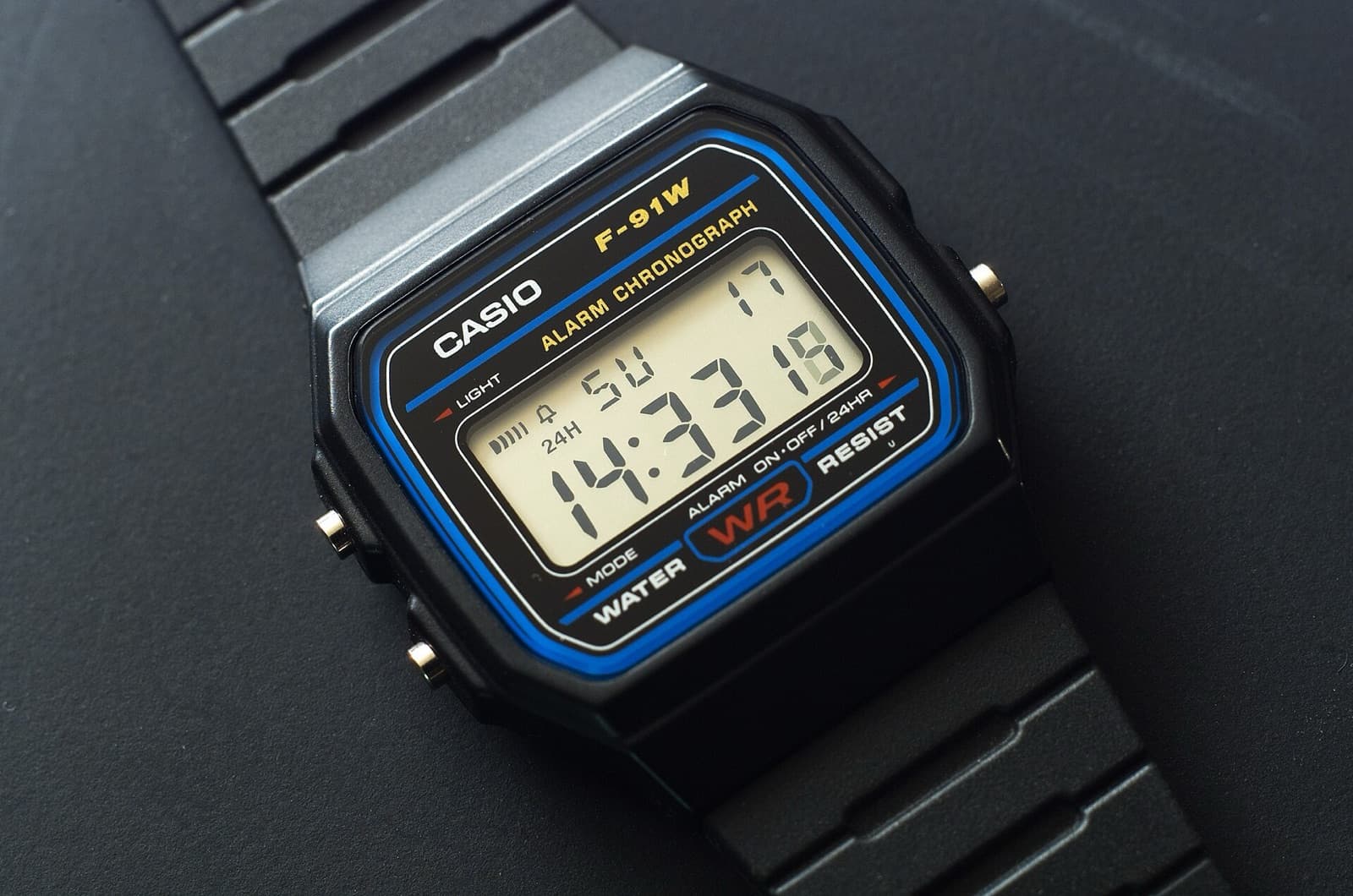
Casio's F-91W is known for its simplicity; the G-Shock is known for its toughness. This is the story of how one engineer's frustration with fragile watches became one of the best-selling watch lines in the world.
1981: "A watch that won't break when dropped"
Kikuo Ibe was an up-and-coming designer at Casio. According to Nippon.com, his own experience with fragile watches, and his belief that others shared the frustration, led him to propose a watch in 1981 that would survive being dropped.
Ibe put together an eight-member unit and called it Project Team Tough. Its goal was a set of three targets the team called "Triple 10":
- survive a 10-metre fall,
- 10 bar water resistance,
- a 10-year battery life.
200 prototypes and a third-floor bathroom window
The early tests were crude: Ibe dropped prototypes out of a third-floor bathroom window. Wrapping the movement in rubber or polyurethane did not work. After a year the team had built more than 100 test models and still had no answer.
Ibe was ready to give up. On a day off he went to a nearby park and watched children playing with a rubber ball. He realised that the centre of a bouncing ball is shielded from the impact: instead of armouring the movement, he could suspend it inside the case so that it absorbed the shock.
That idea became G-Shock's "floating" structure, in which the module is supported only at set points inside the case. According to Nippon.com, it is still the basic structure of G-Shock watches today.
April 1983: the DW-5000C
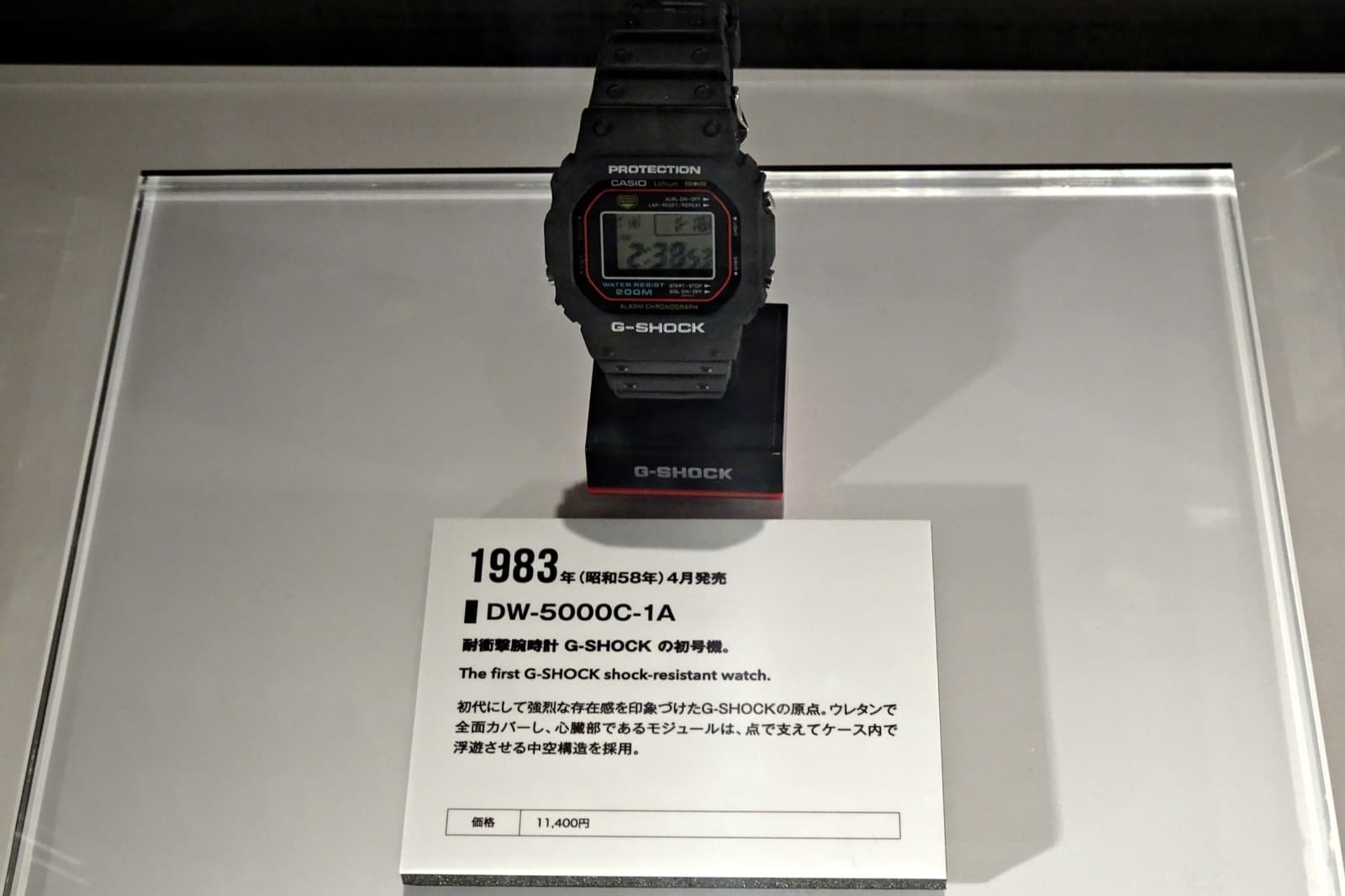
After two years and more than 200 prototypes, the first G-Shock, the DW-5000C-1A, went on sale in April 1983. It cost ¥11,400.
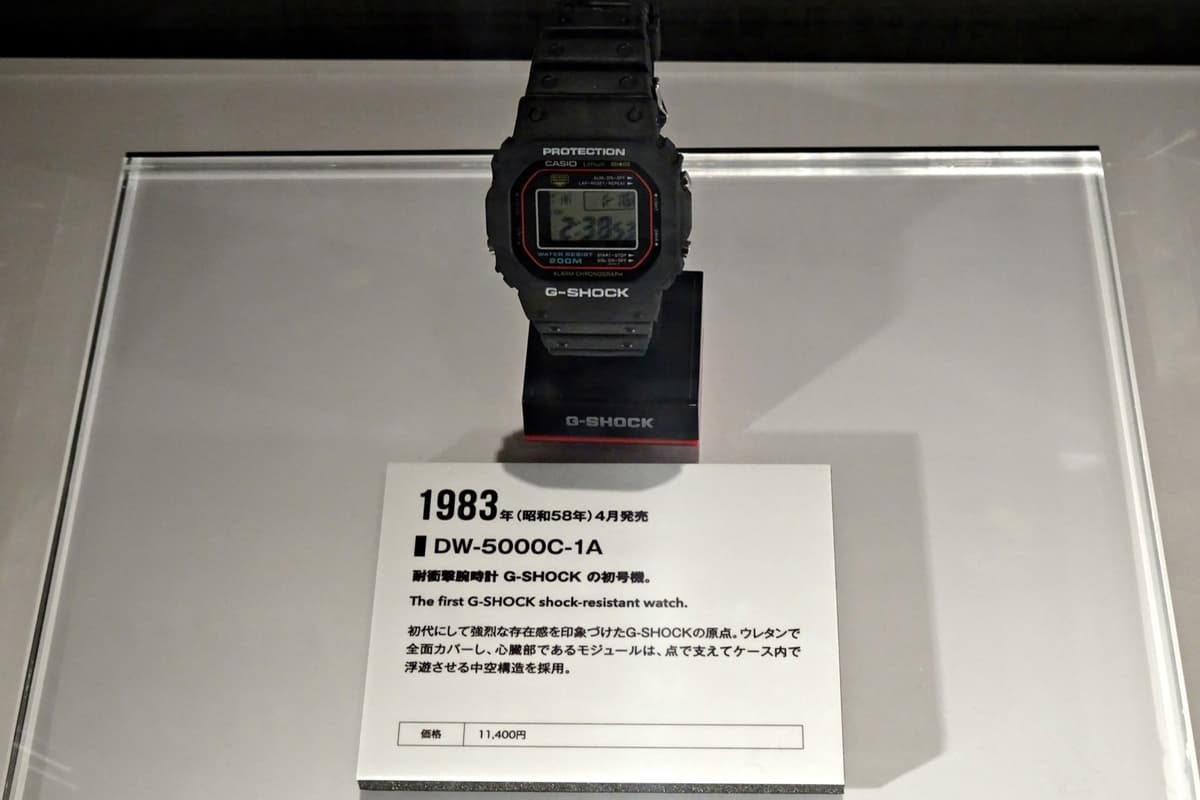
The watch got a lukewarm reception in Japan. Thin, elegant watches were in fashion, and the chunky G-Shock did not fit. Retailers were wary too: as Ibe tells it, repairs were good business for them, and an unbreakable watch hurt that business. One client warned Casio that anything priced above ¥4,000 would not sell; the G-Shock cost more than ¥10,000.
A hockey commercial in America
America embraced the G-Shock first. Casio's television commercial showed an ice hockey player firing a G-Shock into a goalie's glove. When the ad was accused of exaggeration, several TV programmes recreated the scene themselves. The watch survived, and American sales grew.
The 1990s: skaters, surfers and "Speed"
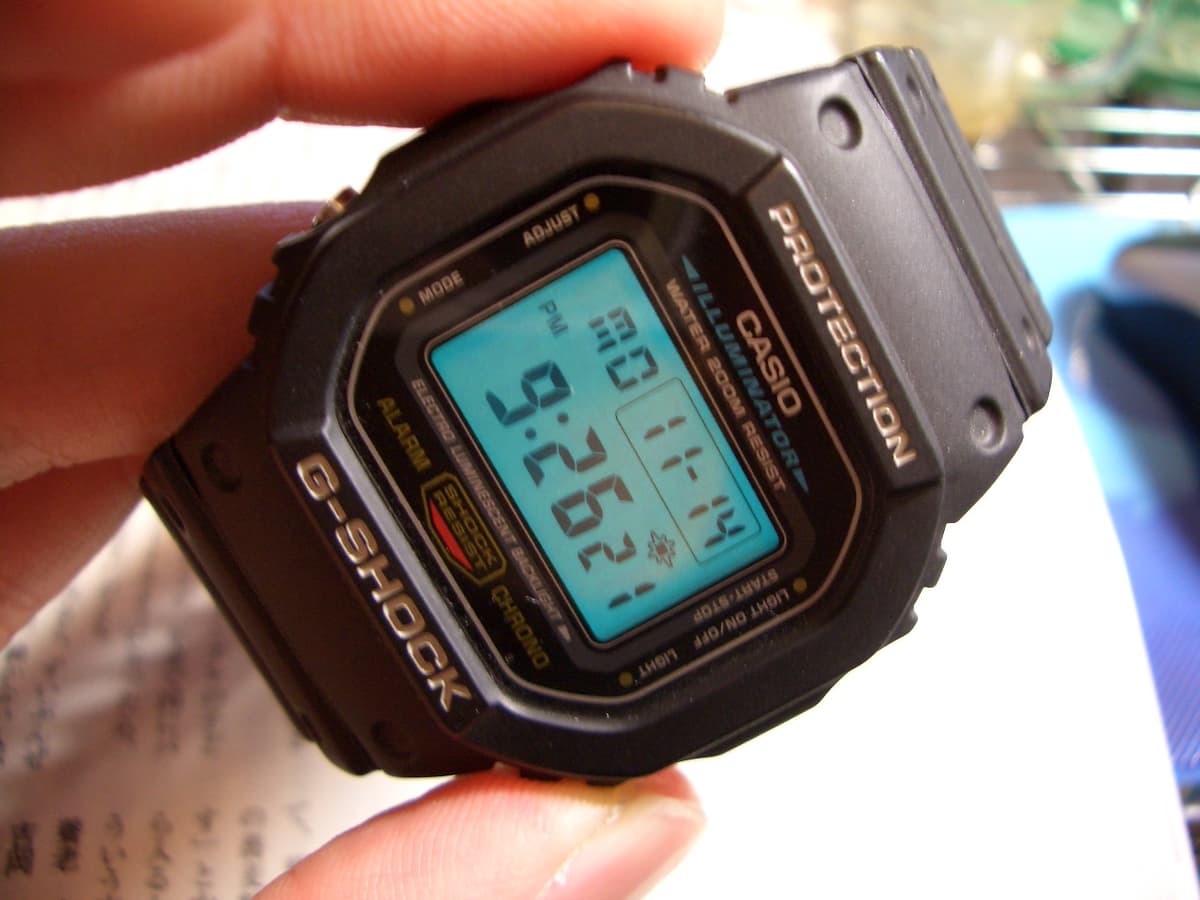
In 1987 came the DW-5600C, the square-cased successor that is still in production in updated form. It is the watch Keanu Reeves wore in the 1994 film Speed. According to G-Central, it was not a prop supplied by the production but Reeves's own watch.
In Japan the turning point came in 1990. According to Casio, the DW-5900C was the first G-Shock hit there, and Japanese shipments grew from about 10,000 in 1990 to about 700,000 in 1995. Skateboarders, surfers and street fashion adopted the watch. The G-Lide line, made for surfers, arrived in 1996; later models added tide graphs. Worldwide sales peaked in 1997 at about 6 million units. Nippon.com reports that demand was so strong that Casio at one point banned its own employees from wearing G-Shocks to keep stock for customers.
From square case to GPS
Sales fell for a while after the peak, and Casio grew the line again through technology. Milestones from the company's 2017 announcement:
| Year | Model | First |
|---|---|---|
| 1996 | MRG-1, MRG-100 | MR-G line aimed at adult buyers |
| 2000 | GW-100 | First radio-controlled G-Shock |
| 2012 | GB-6900 | First model to connect to a smartphone |
| 2014 | GPW-1000 | Combined GPS and radio time signals |
According to Nippon.com, the G-Shock lab today has more than 200 testing machines, and every watch must pass more than 100 tests before it ships.
Today: 100 million watches
Casio announced that worldwide G-Shock shipments passed 100 million in August 2017. In Nippon.com's interview with Ibe, the figure is given as more than 130 million. The line now runs from resin-cased models to the all-metal MR-G that began in 1996, but its best-known face is still the square case of 1983.
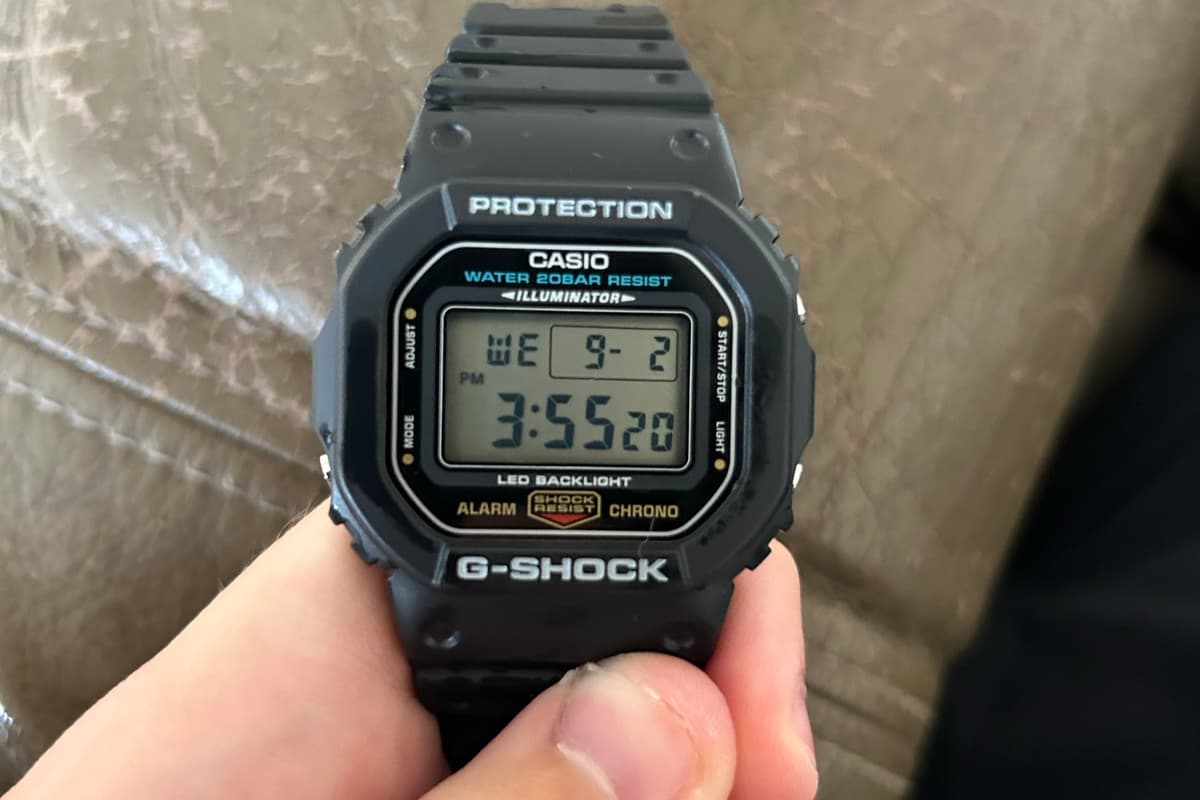
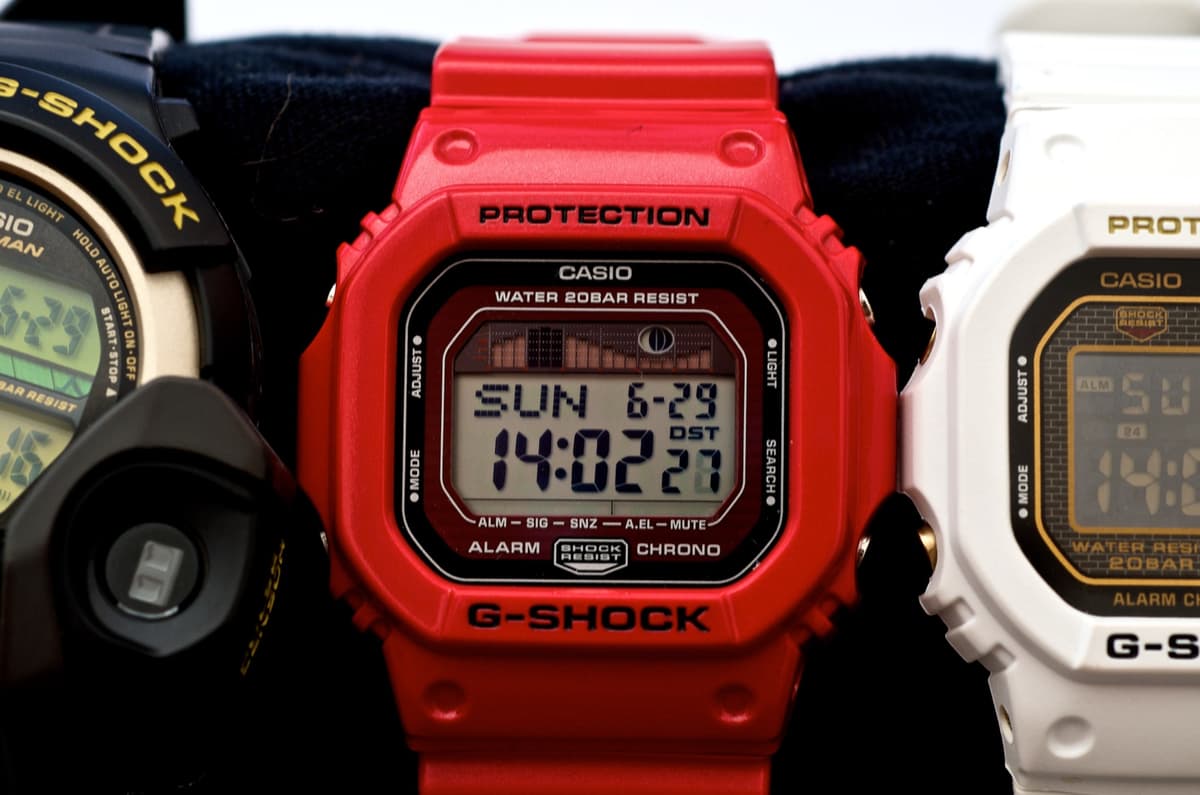
Most G-Shocks are water resistant to 20 bar (200 m). For more of Casio's watches, see the Casio brand page.
Frequently asked questions
Where is G-Shock from?
G-Shock is a watch line from Casio, a Japanese company headquartered in Tokyo.
What was the first G-Shock?
The first G-Shock was the DW-5000C, released in April 1983. Its square case lives on in the DW-5600 series.
Who invented the G-Shock?
Casio engineer Kikuo Ibe. He set up the eight-member "Project Team Tough" for the project he proposed in 1981.
Why doesn't a G-Shock break?
The movement is not fixed rigidly to the case; it is supported only at set points inside it. Like the centre of a rubber ball, it receives less of the impact.
What watch did Keanu Reeves wear in Speed?
A G-Shock DW-5600C. The closest model today is the DW-5600E.