Rolex Submariner vs Omega Seamaster: Comparing Two Legendary Dive Watches
Rolex Submariner Date vs Omega Seamaster Diver 300M: we put two iconic dive watches side by side on case, movement, accuracy, design, price and value.
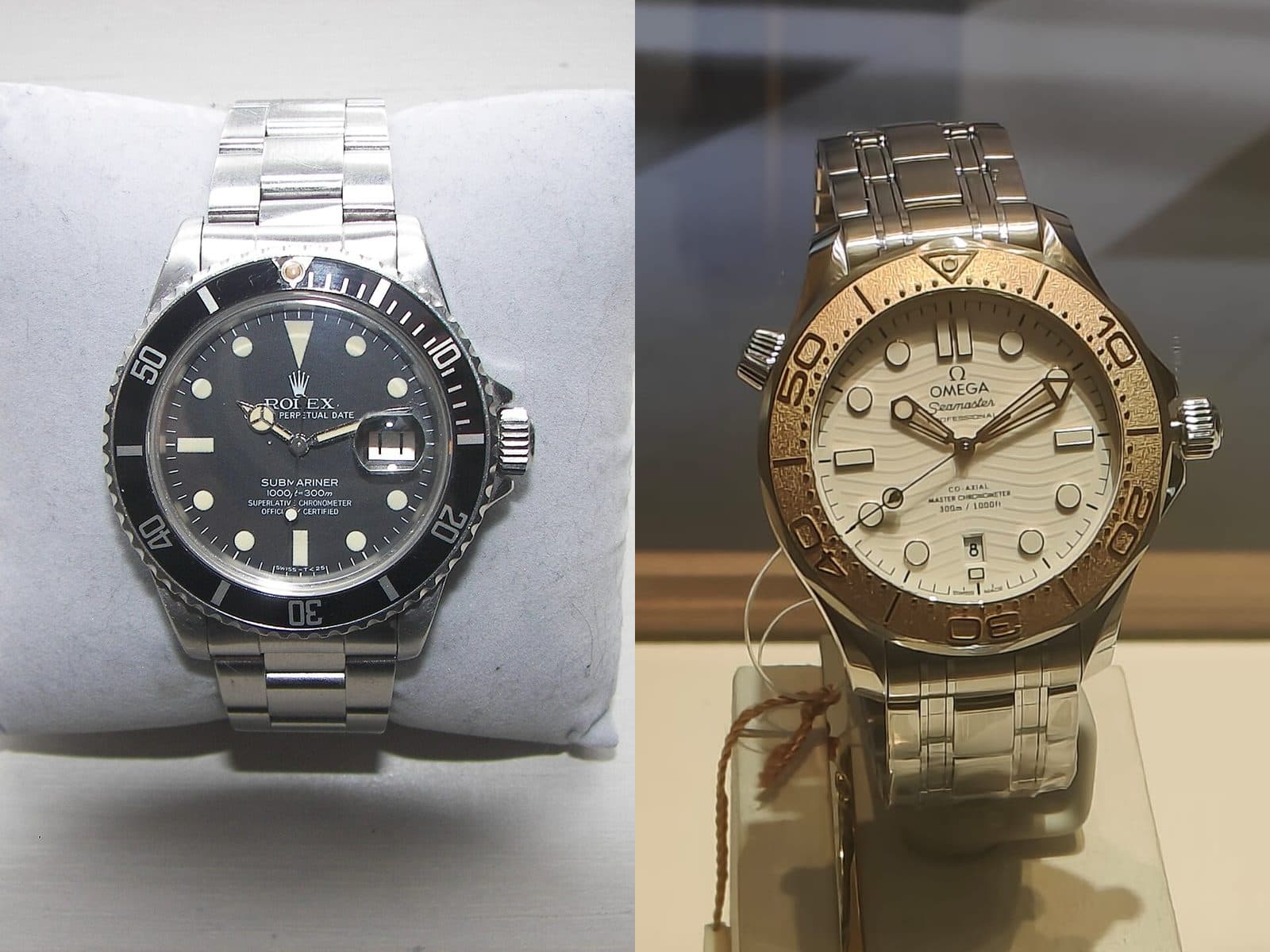
Short answer: Both are steel automatic dive watches, water resistant to 300 metres, with a unidirectional rotating bezel. The Submariner is simpler, slimmer and more "timeless", and it is known for holding its value on the second-hand market. The Seamaster Diver 300M has a more detailed design, a display caseback and far stronger resistance to magnetic fields, and its list price is noticeably lower.
There is no single answer to which one is "better". But there are clear places to look when deciding which one is better for you. Here we compare the current steel versions of both: the Rolex Submariner Date (ref. 126610LN) and the Omega Seamaster Diver 300M (ref. 210.30.42.20.01.001).
Two watches, two stories
The Submariner was introduced in 1953 and soon became the template for the dive watch: black dial, large luminous markers, a 60-minute rotating bezel. The picture that comes to mind when you hear "dive watch" is largely its work. We told its story in our Rolex Submariner article.
The Seamaster name goes back to 1948, but the model in this comparison, the Seamaster Professional Diver 300M, was born in 1993. Two years later it landed on James Bond's wrist in GoldenEye and became "the Bond watch" for a generation. That story is in our Omega Seamaster and James Bond article.
A curious detail: Bond's first watch on screen was a Submariner. So these two rivals have been worn, one after the other, by the same character.
Specifications side by side
| Rolex Submariner Date | Omega Seamaster Diver 300M | |
|---|---|---|
| Reference | 126610LN | 210.30.42.20.01.001 |
| Case diameter | 41 mm | 42 mm |
| Case material | Oystersteel (904L steel) | Stainless steel |
| Water resistance | 300 m | 300 m |
| Movement | Rolex 3235, automatic | Omega 8800, automatic, Co-Axial |
| Power reserve | About 70 hours | About 55 hours |
| Accuracy | −2/+2 seconds a day (Superlative Chronometer) | 0/+5 seconds a day (Master Chronometer) |
| Magnetic resistance | Paramagnetic components | 15,000 gauss (METAS certified) |
| Bezel | Unidirectional, Cerachrom ceramic | Unidirectional, ceramic |
| Dial | Black, plain | Black ceramic, laser-engraved wave pattern |
| Caseback | Solid | Sapphire, movement visible |
| Helium escape valve | No | Yes (at 10 o'clock) |
| Bracelet | Oyster, Glidelock extension | Steel bracelet, diver's extension clasp |
| Warranty | 5 years | 5 years |
The figures are for the brands' current steel versions. Rolex's no-date Submariner (ref. 124060) uses the same case with calibre 3230; Omega also makes the Diver 300M with blue, white and other dial and bezel colours.
Case and how it wears
On paper the two watches are almost the same size, but they feel different on the wrist.
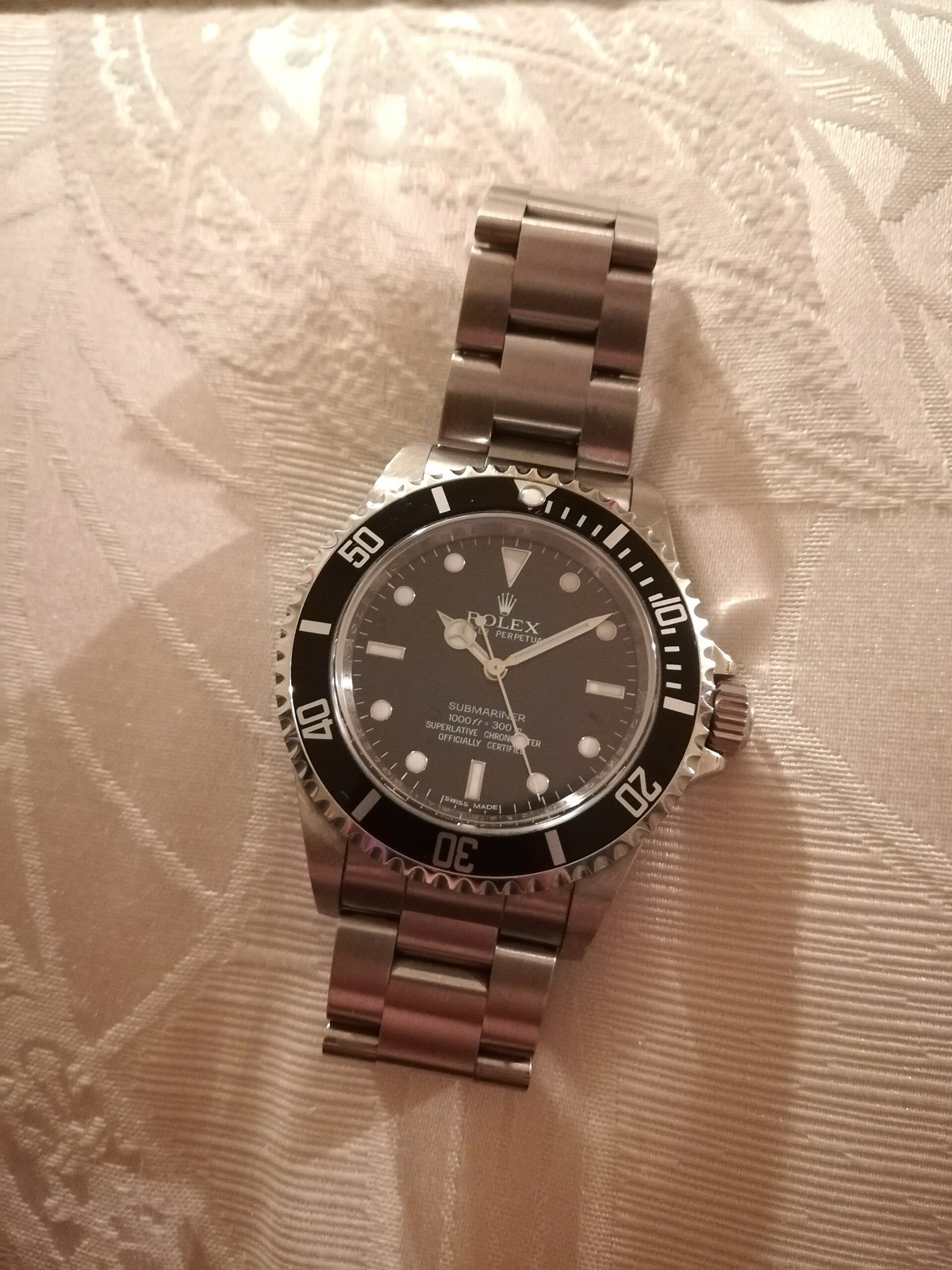
The Submariner has a flatter, more compact profile. The case is plain with soft edges; it slides under a shirt cuff as easily as it sits over a wetsuit. The Glidelock system on the Oyster bracelet lets you extend or shorten it by up to about 2 centimetres without tools. A small but valuable detail if your wrist swells during the day or you want to wear the watch over a jacket.
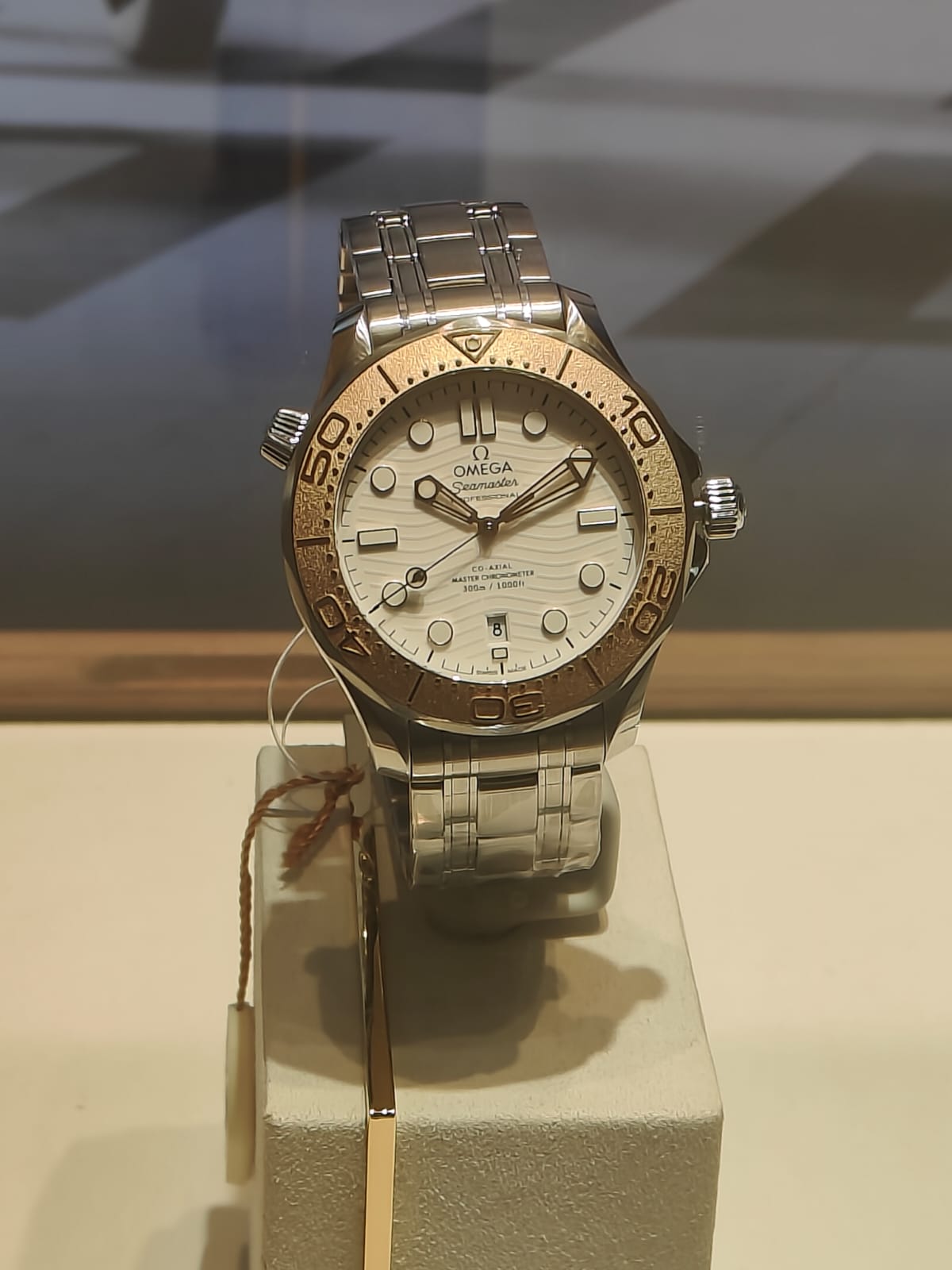
The Diver 300M is a more "architectural" watch. Twisted lyre lugs, the helium escape valve at 10 o'clock and the eye-catching wave pattern give it more movement. The case is slightly thicker and the lugs slightly longer, so people with slim wrists should try it on first.
Movement: which is more accurate?
Both brands set their own chronometer standards above COSC, the independent Swiss chronometer test.
- Rolex Superlative Chronometer: The watch is tested by Rolex after casing, to a limit of −2/+2 seconds a day. The Chronergy escapement and paramagnetic Parachrom hairspring in calibre 3235, together with the long power reserve, make a robust package.
- Omega Master Chronometer: The testing is done by METAS, the Swiss Federal Institute of Metrology. The limit is 0/+5 seconds a day, so the watch never runs slow, only slightly fast at most. The biggest difference is magnetic resistance: calibre 8800 is tested to withstand 15,000 gauss. For a watch that lives among phones, laptops and magnetic bag clasps, that is a real advantage.
In practice both keep excellent time in daily use. Rolex's edge is the tighter tolerance and about 15 hours more power reserve; Omega's is near-immunity to magnetism and a movement you can watch through the sapphire caseback.
Design: simplicity or character?
This is usually where the decision is made.
The Submariner deliberately says little. Seventy years of design language have been refined step by step, but the essence has never changed. That simplicity lets it fit any setting and keeps it from ageing. For some, though, it is too familiar; it is one of the most commonly seen luxury watches on the street.
The Diver 300M carries more detail: the wave dial, skeletonised hands, the helium valve, the bracelet with its distinctive links. It looks more like a tool watch and more playful, and the Bond connection is a bonus. Someone who loves clean lines may find it busy.
Price and availability
Prices change often by country, period and exchange rate, so we do not quote figures here. But the overall picture has been the same for a long time:
- The Submariner's list price is roughly 1.5 to 2 times that of the steel Diver 300M.
- Getting a Submariner from an authorised Rolex dealer often means a waiting list; on the second-hand market it has traded near or above list price for many years.
- The Diver 300M is usually easier to find at authorised dealers, and it commonly changes hands below list price second-hand.
In short, the Submariner is the safer choice for holding value; the Diver 300M gives you more technical features for the money.
Which one should you choose?
Choose the Rolex Submariner if:
- You want a simple, timeless watch that suits any setting,
- You care about the watch holding its value,
- A slimmer case and longer power reserve matter most to you.
Choose the Omega Seamaster Diver 300M if:
- You like a design with more character and detail,
- You want to see the movement and have strong magnetic resistance,
- You want to spend your budget more efficiently or buy without waiting.
Both are watches you can wear for decades and, with servicing, pass down. If you can, try both on; the decision is often made in the first few seconds on the wrist.
Frequently asked questions
Is the Rolex Submariner or the Omega Seamaster better? There is no single winner. The Submariner leads on simplicity, a slimmer case, power reserve and value retention; the Seamaster Diver 300M on magnetic resistance, a sapphire caseback, a more detailed design and a lower price.
Do the Submariner and Seamaster have the same water resistance? Yes. The current Submariner Date and Seamaster Diver 300M are both water resistant to 300 metres.
What is the second crown on the Seamaster for? The button at 10 o'clock is not a crown but a helium escape valve. It lets helium that builds up inside the watch of saturation divers escape during decompression without stressing the case.
Which one is heavier? The Diver 300M case is slightly larger and thicker, so it wears a little bigger and heavier. The difference is small but noticeable on slim wrists.
Where are Rolex and Omega from? Both are Swiss. We covered Rolex's origins in Where is Rolex from?; Omega was founded in La Chaux-de-Fonds in 1848 and is now part of the Swatch Group.
For all of the brands' stories, see our Rolex and Omega pages.
Related Stories
More stories from the same category

Where Is Rolex From? From London to Geneva
Rolex is Swiss today, but it was born in London: founded in 1905, it moved to Geneva in 1919. Who owns it, where is it made, and where does the name come from?
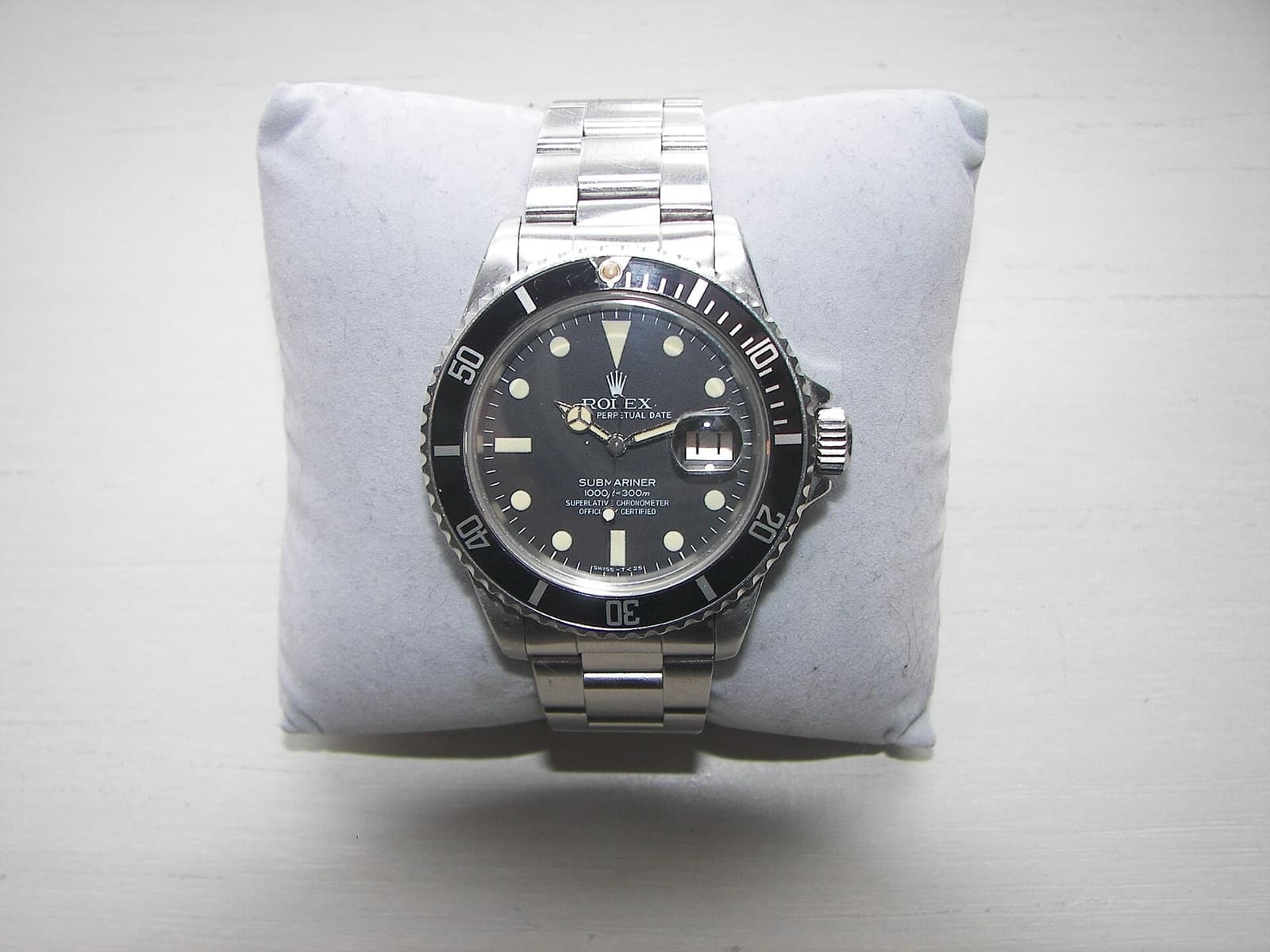
🌊 Beneath the Waves: The Quiet Legend of the Rolex Submariner
There’s a moment — right before a diver disappears beneath the surface — when everything goes quiet. The world fades into shades of blue, the light dances above, and only one sound remains: the steady rhythm of a heartbeat... or perhaps, the tick of a Submariner. That tick isn’t just about time. It’s about trust, precision, and a silent conversation between man and machine. Because the Rolex Submariner was never just built to tell time — it was built to endure it.