Rolex Daytona: The Story of the Legendary Chronograph Since 1963
How did the Rolex Daytona become one of the most searched watches in the world? Paul Newman, the Zenith movement, key references and the Daytona of today.
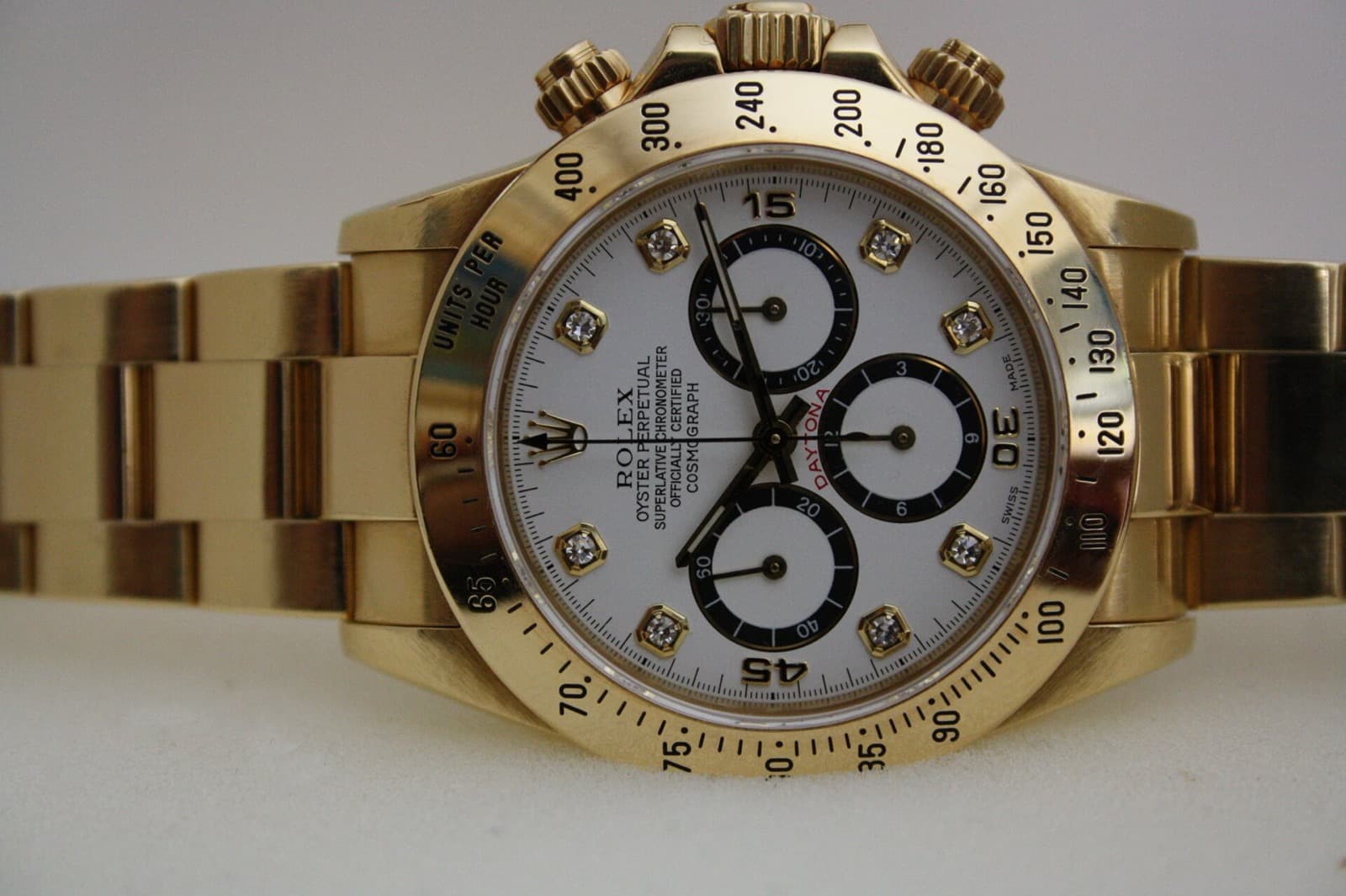
Short answer: The Rolex Cosmograph Daytona was born in 1963 as a chronograph for racing drivers. In its early years it barely sold; today it is one of the most searched watch models in the world. Behind that turnaround are an actor, a race track and more than sixty years of patient development.
Daytona sits near the top of every list of watch searches: for years it has ranked right behind the Submariner, and it made the top three in search data for the first quarter of 2026. In this story we look at where the Daytona came from, how it changed and why it draws so much attention.
A watch named after a race track
Daytona Beach in Florida was famous from the early 20th century for the speed records set on its sand. Sir Malcolm Campbell, a friend of Rolex founder Hans Wilsdorf, set land speed records there in the 1930s with a Rolex on his wrist.
The link grew stronger with the Daytona International Speedway, which opened in 1959: Rolex became the track's official timekeeper in 1962. A year later, in 1963, a new chronograph called the Cosmograph was introduced. Soon the word "Daytona" was added to the dial, and the watch came to be known by that name.
The bond is still there today: Rolex has been the title sponsor of the Rolex 24 at Daytona since 1991, and the winning drivers each receive a Daytona.
What does a chronograph do?
The Daytona is a chronograph, meaning it is a stopwatch as well as a watch. The two pushers on the right of the case start, stop and reset the timing, and the three small counters on the dial show the elapsed seconds, minutes and hours.
The detail that makes the Daytona a racing watch is the tachymeter scale on its bezel. Time how long it takes to cover a set distance, say one kilometre, and the number the seconds hand points to on the bezel gives your average speed. That is what "UNITS PER HOUR" on the bezel means.
Paul Newman and the $17.8 million watch
In the 1960s and 70s the Daytona sat in dealers' windows for a long time. It was hand-wound, most buyers preferred automatic watches, and few people needed a chronograph.
Some Daytonas from that period came with a more "exotic" dial, with square-tipped markers on the small counters and an outer track in a contrasting colour. These dials were not popular either. Until actor and racing driver Paul Newman started wearing one. Newman's watch was a gift from his wife Joanne Woodward, engraved on the back with "Drive Carefully Me".
Over the years collectors started calling these dials the "Paul Newman Daytona". On 26 October 2017, Newman's own watch, ref. 6239, sold at Phillips in New York for $17.75 million including fees. At the time it was the most expensive wristwatch ever sold at auction, and the sale made the Daytona legend bigger still.
The Daytona through its references
Over sixty years the Daytona has gone through four main generations. Each kept the design of the one before and changed what was inside.
| Period | Key references | Movement | What changed? |
|---|---|---|---|
| 1963–1988 | 6239, 6241, 6262, 6263, 6265 | Hand-wound (Valjoux-based) | The first Daytonas. 37 mm case. "Oyster" versions with screw-down pushers arrived from 1965. |
| 1988–2000 | 16520 | Calibre 4030, automatic (Zenith El Primero-based) | The first automatic Daytona. The case grew to 40 mm. |
| 2000–2023 | 116520, 116500LN (2016) | Calibre 4130, automatic, made by Rolex | A chronograph movement entirely of Rolex's own. In 2016 the steel model got a black ceramic bezel. |
| 2023– | 126500LN | Calibre 4131, automatic | Slimmer case, Chronergy escapement, refined dial and bezel details. |
The Zenith partnership of the second generation is one of the most talked-about chapters of the Daytona story. Rolex used Zenith's famous El Primero chronograph movement as a base but changed it heavily: it lowered the beat rate, replaced a large share of the parts and named the calibre 4030.
The Calibre 4130, which arrived in 2000, was the first chronograph movement designed entirely by Rolex. It offered a sturdier build with fewer parts and a power reserve of about 72 hours.
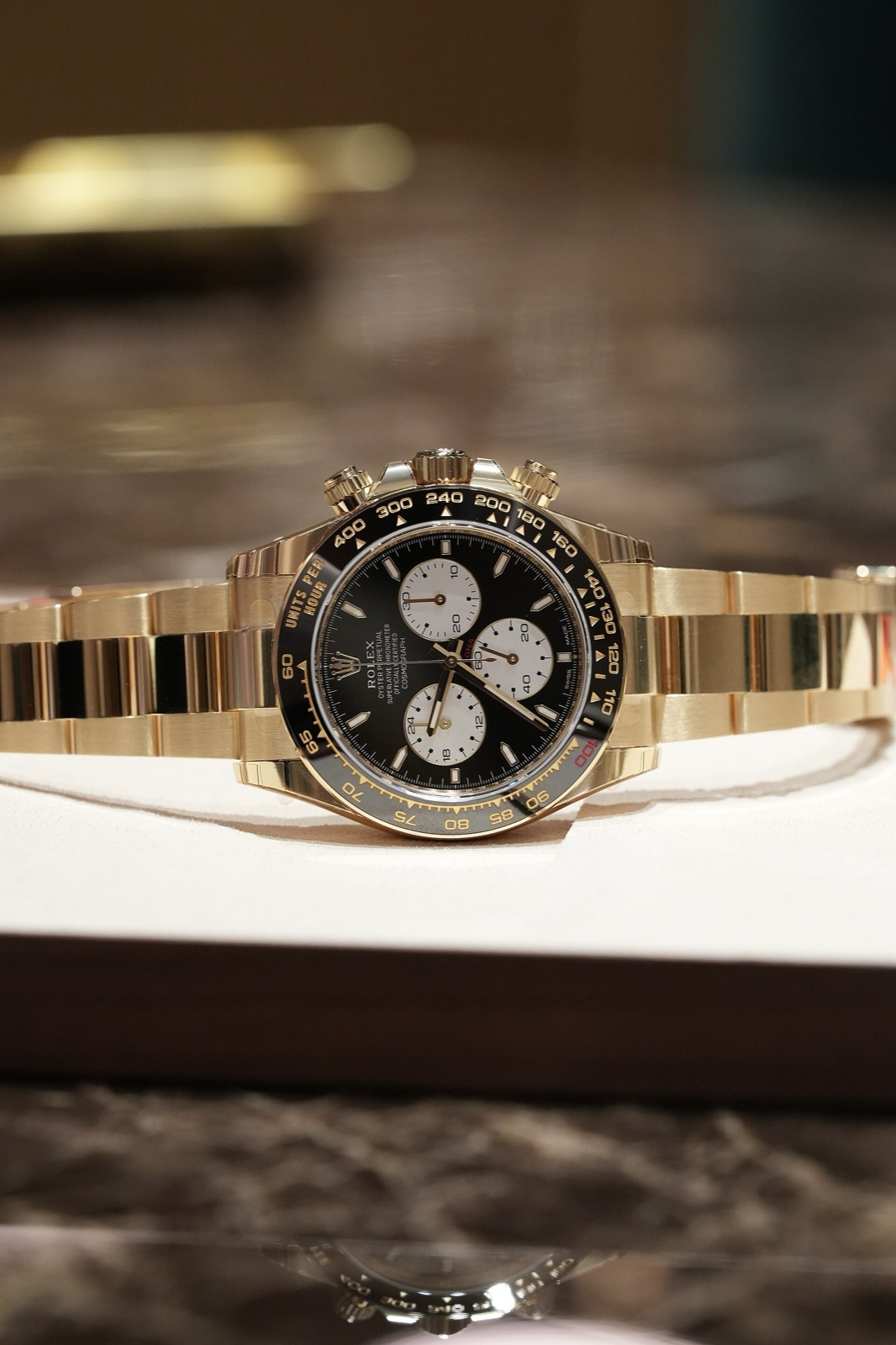
Today's Daytona: ref. 126500LN
In 2023, the Daytona's 60th year, Rolex updated the model. From the outside the changes are small: the case is a little thinner, the metal rim around the bezel a little more visible, the rings around the counters more refined. The real change is inside.
| Rolex Cosmograph Daytona (steel) | |
|---|---|
| Reference | 126500LN |
| Case diameter | 40 mm |
| Case material | Oystersteel |
| Water resistance | 100 m |
| Movement | Rolex 4131, automatic chronograph |
| Power reserve | About 72 hours |
| Accuracy | −2/+2 seconds a day (Superlative Chronometer) |
| Bezel | Black Cerachrom ceramic with tachymeter scale |
| Dial | White or black, with contrasting counters |
| Bracelet | Oyster, Oysterlock safety clasp |
Another first came the same year: the platinum Daytona became the first Rolex Daytona with a sapphire caseback showing its movement.
The Le Mans Daytona
Rolex has also been the official timekeeper of the 24 Hours of Le Mans since 2001. In 2023 it introduced a special Daytona for the race's 100th anniversary. Two details set it apart:
- The "100" on the bezel is painted red.
- Thanks to the 4132 calibre, the hours counter measures up to 24 hours instead of 12, enough to time a full Le Mans race.
The Le Mans Daytona was later made in other gold versions too. Its fine dial details also nod to the "Paul Newman" dials of the 1960s.
Why is the Daytona so searched?
It is hard to pin the Daytona's popularity on a single reason, but several things come together:
- Story: Race tracks, Paul Newman and a record auction give the watch more weight than an ordinary luxury product.
- Design: A face that has barely changed in sixty years and is recognisable at a glance.
- Scarcity: Getting a steel Daytona from an authorised dealer has been very hard for a long time. Waiting lists and high second-hand prices keep people curious.
- Value retention: The Daytona has traded above its list price on the second-hand market for many years. Prices change often by country and period, so we don't quote figures here.
Frequently asked questions
Why is the Rolex Daytona called "Daytona"? It is named after Daytona Beach in Florida and the Daytona International Speedway. Rolex has been the track's official timekeeper since 1962.
What is a Paul Newman Daytona? It is the name for the "exotic" dial, with square-tipped counter markers and a contrasting outer track, used on some Daytonas in the 1960s and 70s. It takes its name from Paul Newman, who wore one.
Does the Daytona use a Zenith movement? Only ref. 16520 and its siblings, made between 1988 and 2000, used the Zenith El Primero-based Calibre 4030. Since 2000, Daytonas have used Rolex's own chronograph movements.
How water resistant is the Rolex Daytona? The current Daytona is water resistant to 100 metres. That is enough for swimming, but the Daytona is not a dive watch. If you are looking for a Rolex made for diving, see our Rolex Submariner story.
What is the difference between the Daytona and the Omega Speedmaster? Both are legendary chronographs, but they come from different places: the Daytona from race tracks, the Omega Speedmaster from the wrists of astronauts on their way to the Moon. The Daytona is automatic; the classic Moonwatch is still hand-wound.
If you are curious about Rolex's origins, read Where is Rolex from?, and for all of the brand's stories see our Rolex page.
Related Stories
More stories from the same category
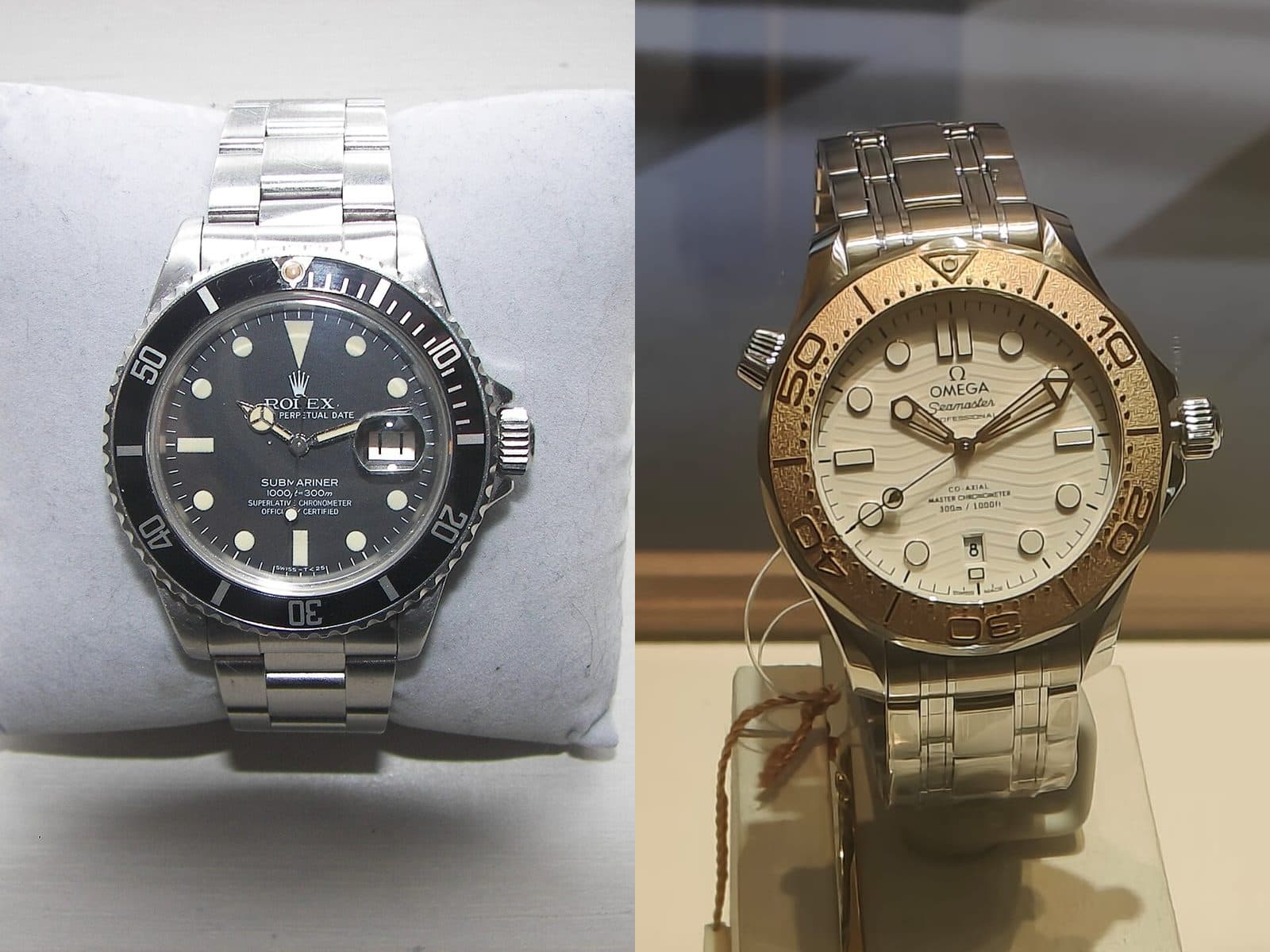
Rolex Submariner vs Omega Seamaster: Comparing Two Legendary Dive Watches
Rolex Submariner Date vs Omega Seamaster Diver 300M: we put two iconic dive watches side by side on case, movement, accuracy, design, price and value.
Where Is Rolex From? From London to Geneva
Rolex is Swiss today, but it was born in London: founded in 1905, it moved to Geneva in 1919. Who owns it, where is it made, and where does the name come from?
Rolex Submariner History: The Legendary Dive Watch Since 1953
The Rolex Submariner was introduced in 1953 as ref. 6204, water resistant to 100 metres. We tell the story of how a diver's tool became a true design icon.